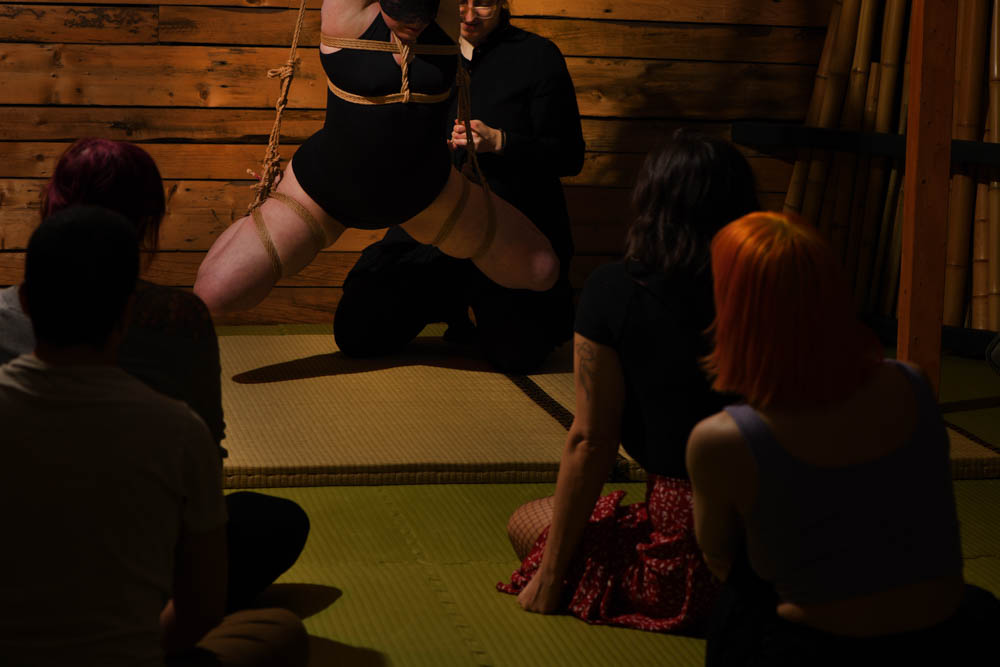
Shibari 縛り – A conjugation of the verb “to tie” – shibaru. Generally refers to Japanese rope when used in English.
Kinbaku 緊縛 – Literally “tight binding,” and refers to tying a person with rope. It is generally considered a synonym of shibari when used in English, although kinbaku is considered specifically erotic among professional practitioners.
Tying someone up with ropes is a practice that can take many forms and serve many purposes. It can be sensual, friendly, violent, gentle, artistic, acrobatic, emotional or chaotic; it is up to the participants to decide. For us, it is a form of personal expression aimed at creating an experience for the participants and, sometimes, for those watching. It is an emotional journey of trust, vulnerability and exploration for both body and mind.
Every person is unique, and the practice adapts to each individual according to their desires and interests. Rope is accessible to everyone, regardless of gender, age, weight, ethnic background, sexual orientation, etc. There are always ways to adapt it to suit each person’s specific circumstances.
The practice of Japanese rope bondage has its roots in violent practices from the distant past and is rooted in eroticism. Rope does not have to be intimate or sadistic, but we respect its history.
Rope must be consensual and carried out with an awareness of the risks. We are constantly learning and developing good communication practices and risk mitigation strategies.